The master of camouflage and mimicry, and one of my favorite marine creatures, the Octopus, is by far the most intelligent amongst all invertebrates.
Although Biologists share no consensus about the extent of its intelligence yet, many experiments have shown that the Octopi – or Octopuses- have an admirable memory system that can store both sort & long-term memory, while they are good at problem solving!
Some facts will surprise you: Octopi can distinguish between different shapes and patterns while they love to play by repeatedly releasing bottles or toys into a circular current in their aquariums and then catching them!
Apart from joyful and playful personalities, Octopi are also adrenaline and thrill seekers, since they often break out of their aquariums in order to seek food! They may even pay a visit to other aquariums to eat, and then return back to their own! Sometimes they can get really bossy and board on fishing boats to open holds and eat crabs or open bottles and jars to eat fish !
Octopi have a great sense of humor as well! They use tools, such as sea clams or even coconut shells, as shelters or temporary homes.
Due to this notable intelligence, the Octopus was the first cephalopod to be protected in UK under the Animals Act (Scientific Procedures) 1986. What is more, Octopi, are listed as experimental animals in which surgery can be performed only under anesthesia.
The Latin term Octopus, derived from Ancient Greek ὀκτώπους (oktōpous, «eight-footed») and similarly, the term «Octopoda» refers to the taxonomic order of cephalopod molluscs that comprises the octopi.
When is comes to its physiology and biology, from the very first look we know that the Octopi have 8 arms and 2 eyes! It also has a beak within its mouth and has no internal or external skeleton, which makes squeezing through tight places significantly easy.
What one might not know is that all Octopi – yes, all of them!- are relatively venomous, but, thankfully, only one group of them is known to pose a treat to humans, the blue-ringed octopus. This Octopus lives in tide pools or coral reefs in the Pacific and Indian ocean, but is more common in New South Wales, South Australia. Despite its small size, which is not bigger than 20cm, it is listed amongst the most venomous marine animals in the world, because its venom contains tetrodotoxin, a neurotoxin, which causes severe paralysis -disabling the respiratory muscles- and, if not treated, can lead to death within minutes. Tetrodotoxin is 1,200 times more toxic than cyanide and is produced by bacteria in the salivary glands of the octopus.
One Blue-ringed Octopus carries enough venom to kill twenty-six adults humans within minutes, with tiny and often painless bites. With no antivenom being available yet, you should definitely avoid touching this dude!
Octopi also have a great eyesight and they can distinguish the polarization of color, meaning that they can actually see colors! Apart from that, they also have an excellent sense of touch, since they are equipped with chemoreceptors.
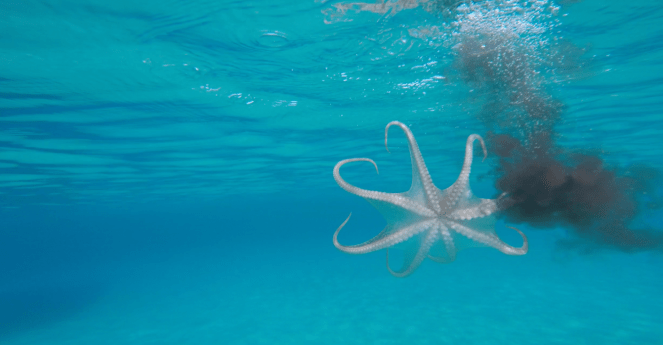
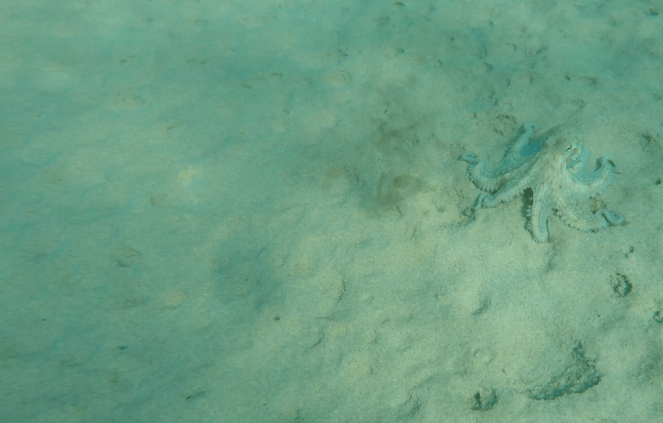
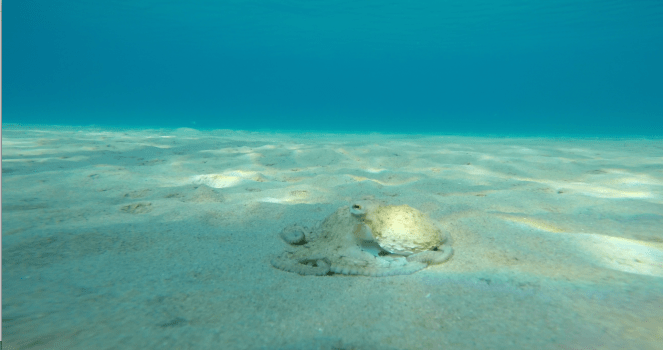
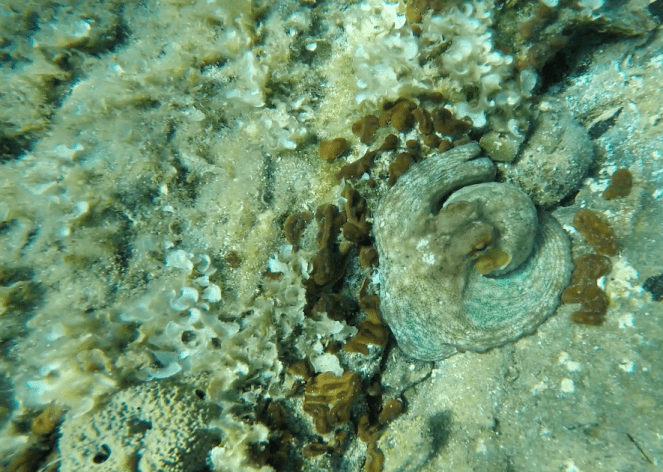
Their chosen habitat is very diverse, since one finds them in coral reefs, pelagic waters and open floors around the world. They manage to escape their predators primarily through camouflage and mimicry and have as secondary defenses the fast escape and the distraction with the use of ink. The main coloring agent of the ink used by the Octopi is our well-known melanin, the exact same chemical that gives our hair and skin the dark color.
The mimic Octopus, Thaumoctopus mimicus, is a real crafty. It can dynamically change its shape and color pattern to mimic over 15 species of nearby dangerous predators, such as snakes, jellyfish and stingrays. When it chooses to mimic a venomous sea snake, it buries in the sediment all of its body but two arms and uses photophores in order to copy the color pattern movement of a sea snake by undulating above the bottom. (Jeffrey Levinton, Marine Biology, International Third Edition, Part I, Chapter 3, p.51).
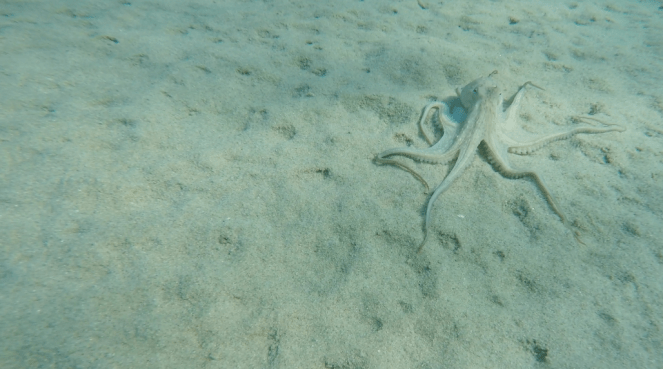
Octopi move within their chosen habitat either by crawling – gently walking on the sea floor using their arms- , when they are not in a hurry , or by swimming and by jet propulsion when they want to move fast.
Despite all these great abilities, Octopi have a relatively short lifespan of approximately 3 to 5 years – with some species not exceeding the 6 months of life- with the only exception being the Giant Pacific Octopus (with size up to 15kg and 4.3m !), which can live up to 5 years.
Within their causes of death is also reproduction: males can live only for a few months after mating. When it comes to females, approximately 6 weeks after mating, they lay 20,000-100,000 eggs and for the next 5-8 months they do nothing but caring about them. They do not leave their brood, even to eat, and will eventually become weaker and die of starvation, within several weeks, after the eggs hatch.
Feels like knowing them a bit better now?
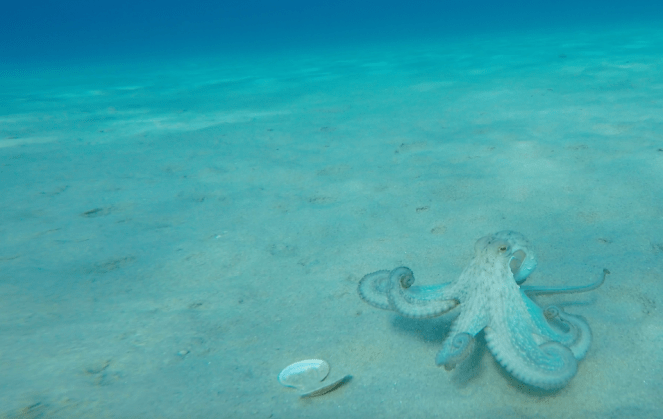
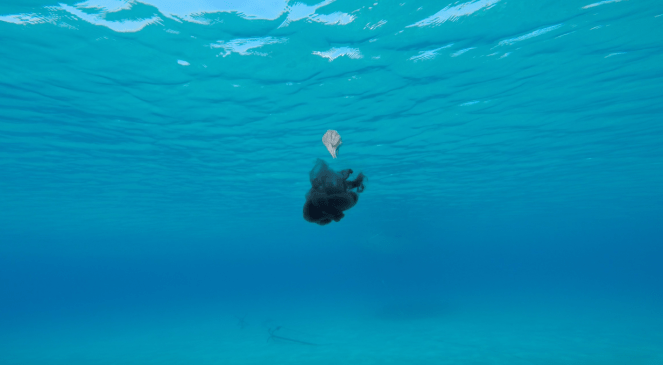
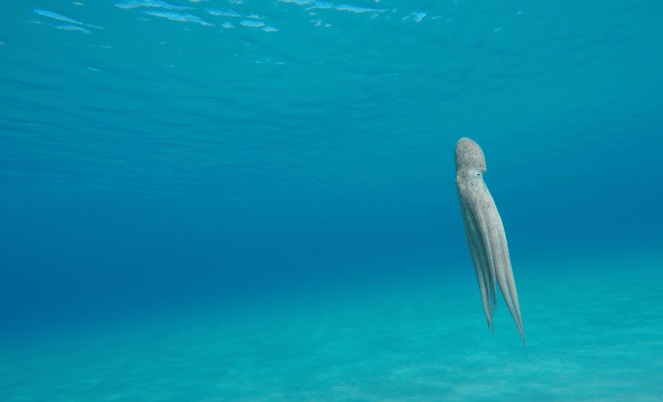
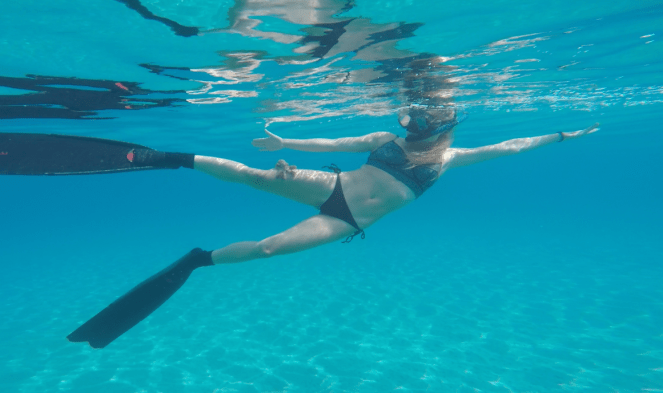
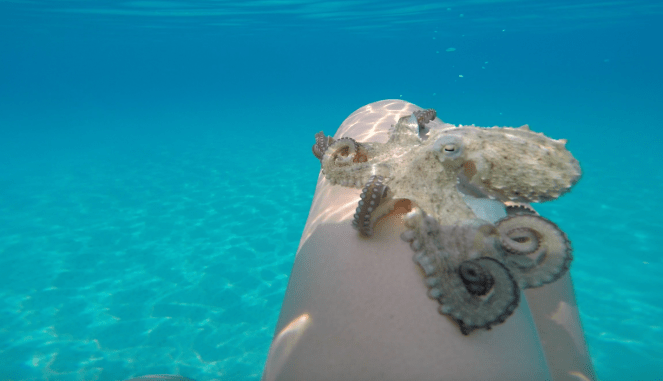
Check out my photos from various Octopi spotted during my Summer Research.
More information and details about the places and habitat in which they were found will be uploaded soon. More pictures will be added from day to day, since the material collected is pretty rich !
Enjoy!







Sources:
https://en.wikipedia.org/wiki/Octopus
https://en.wikipedia.org/wiki/Cephalopod_beak
https://en.wikipedia.org/wiki/Blue-ringed_octopus
https://en.wikipedia.org/wiki/Jet_propulsion
Marine Biology, Jeffrey Levinton, International Third Edition, Oxford University Press
 _blue goldfish